




 Morgan Riley
In today’s rapidly evolving digital landscape, the emergence of artificial intelligence (AI) is revolutionizing e-Commerce, making it an integral part of our daily lives. AI is the driving force behind the creation of hyperpersonalized e-Commerce, a breakthrough concept that is redefining online shopping experiences.
By harnessing the power of AI algorithms to analyze vast volumes of data, e-Commerce platforms are now able to understand and cater to the unique preferences, behaviors, and purchasing patterns of each customer. This innovation is not just about offering products; it’s about crafting a shopping journey uniquely tailored to every individual, transforming the way we engage with online retail like never before.
In a Nutshell
- Hyperpersonalized e-Commerce refers to the use of artificial intelligence (AI) to personalize and tailor the online shopping experience to each customer.
- Using AI algorithms and data analytics, hyperpersonalized e-Commerce enables companies to understand customer preferences and provide personalized product recommendations.
- By offering a seamless and individualized shopping experience, hyperpersonalized e-Commerce can increase customer satisfaction and loyalty.
- AI based chatbots and virtual assistants can help customers throughout the entire shopping process, improving customer service and the overall shopping experience.
- Hyperpersonalized e-Commerce allows companies to optimize their marketing efforts through targeted ads and promotions for specific customer segments.
- With the help of AI, companies can leverage customer data to gain valuable insights and make data driven decisions.
- Implementing hyperpersonalized e-Commerce requires collecting and analyzing large amounts of customer data, which raises data privacy and security concerns.
- AI enables dynamic pricing and inventory management in real time, optimizing pricing strategy and stock availability based on customer demand.
- Hyperpersonalized e-Commerce presents opportunities for companies to stand out in a crowded marketplace by personalizing the shopping experience and offering unique products and services.
- As AI technology continues to advance, hyperpersonalized e-Commerce is likely to become more sophisticated and offer even more personalized and convenient shopping experiences.
However, what sets hyperpersonalized e-Commerce apart from conventional e-Commerce? It all comes down to AI’s power. Artificial intelligence (AI) systems may examine each client’s data, historical shopping behavior, browsing trends, and even social media activity to provide highly personalized recommendations, replacing the need for human intuition or generic consumer segmentation.
Advertisement

Businesses can now offer a genuinely tailored experience to customers, which boosts customer happiness and eventually boosts revenue, thanks to this clever technology.
The capacity of AI powered hyperpersonalized e-Commerce to evolve and get better over time is one of its most intriguing features. Artificial intelligence (AI) algorithms are able to improve the accuracy and relevance of their recommendations by continuously learning from client interactions and feedback. With each encounter, the purchasing experience is made more and more personalized thanks to this iterative process.
Hyperpersonalized e-Commerce, powered by artificial intelligence, is paving the way for personalized shopping experiences like never before.
Jane Smith
AI powered hyperpersonalized e-Commerce benefits companies as well as customers. Businesses may make data driven decisions and optimize their strategies by gaining important insights into client preferences and behavior with AI based analytics. Additionally, businesses can increase client engagement and loyalty by providing tailored promotions and discounts.

In conclusion, AI powered hyperpersonalized e-Commerce is making online shopping a unique and customized experience. Retailers can now customize every step of the customer experience to meet individual preferences, boosting customer satisfaction and revenues, thanks to AI algorithms that analyze massive amounts of data. Prepare yourself for an amazing shopping experience where artificial intelligence will lead you to the ideal purchase.
Use Cases of AI Driven Hyperpersonalized e-Commerce
Hyperpersonalization in Fashion Retail
Hyperpersonalization has changed the game in the fiercely competitive world of fashion retail. The capacity to provide customers with highly customized experiences by adjusting goods and services to meet their specific requirements and preferences is known as hyperpersonalization. Fashion businesses may offer products that actually respond to individual tastes and reinvent their consumer interactions by utilizing artificial intelligence based solutions.
Personalized apparel recommendations using AI are one application of hyperpersonalization in fashion retail. Artificial intelligence (AI) algorithms are able to produce highly personalized recommendations by evaluating vast amounts of data, including a user’s surfing history, purchasing habits, and fashion preferences.
These algorithms provide clients with choices for clothes that complement their body type and meet their tastes based on variables like body form, preferred styles, and current fashion trends. This degree of customization boosts client satisfaction and loyalty, in addition to improving the purchasing experience.

Hyperpersonalization in the Beauty Industry
Another sector seeing a rise in hyperpersonalization is the beauty industry. In the past, cosmetic products were created with a broad market base in mind, frequently ignoring personal tastes and variances. But with the development of AI, it’s now feasible to build personalized makeup and skin care solutions that cater to individual needs and solve particular issues.
AI technologies can create personalized skin care products by analyzing a variety of characteristics, including skin type, age, climate, and lifestyle. Artificial intelligence (AI) algorithms can make product recommendations with precise ingredients and formulations that are more likely to yield the best outcomes by gathering and analyzing data on an individual’s unique skin issues and concerns. This degree of customization guarantees greater customer satisfaction by enabling customers to successfully handle their unique skin care demands.
AI driven hyperpersonalization is not limited to skin care; it is also present in the makeup industry. Beauty companies can use artificial intelligence (AI) to offer personalized cosmetics suggestions based on customer preferences, skin tones, and facial characteristics. Artificial intelligence (AI) algorithms may identify cosmetic hues and looks that accentuate a customer’s distinctive features by examining their photo. This allows customers to try out several looks and enhances their buying experience.
In conclusion, the application of AI driven hyperpersonalization in e-Commerce has made it possible for unprecedented personalization and an improved consumer experience. AI technology allows businesses to customize products to individual preferences, which boosts consumer pleasure, engagement, and brand loyalty in both the fashion and beauty industries. AI driven hyperpersonalization is poised to transform how companies engage with customers and provide individualized goods and services as the e-Commerce industry develops.

Hypercustomization in Online Grocery
Super customization in internet based grocery stores Online grocery shopping has grown in popularity in the age of digital transformation since it is convenient and saves time. But a new frontier has emerged with the emergence of hyperpersonalization in e-Commerce. AI powered hyperpersonalized e-Commerce is transforming grocery shopping by offering a more individualized and customized experience than ever before.
Imagine a grocery store that is so aware of your tastes that it can anticipate your needs before you even become aware of them. Hyperpersonalization, which artificial intelligence (AI) has made possible, has revolutionized online shopping. Every element of your shopping experience is customized to meet your needs, from shopping lists based on your dietary restrictions and preferences to unique product recommendations.
Because it can transcend standard e-Commerce, hyperpersonalization in online purchasing offers a new perspective. It goes beyond providing a large selection of goods at competitive prices; instead, it dives into the world of customization and individualization, giving clients the chance to have a genuinely exceptional shopping experience.
Online purchasing with hyperpersonalization cuts down on extra choice while also saving time. The system learns your habits with AI algorithms that examine your past purchases and preferences. This makes it simpler to find products you love and find new ones that suit your tastes.
Hyperpersonalized online shopping blends convenience and personalisation to create a genuinely unique and pleasurable purchasing experience in a world where time is money. Goodbye to general recommendations and hello to customized advice based on your unique requirements and preferences.
In conclusion, the hyperpersonalization of online shopping made possible by AI is revolutionizing the way we shop. It elevates online grocery shopping by offering a convenient, customized, and personalized experience. Accept the future of retail and delve into the realm of hyperpersonalized, AI powered e-Commerce.

 Emily Roberts
The Future of AI in Hypercustomized e-Commerce
Welcome to the exciting world of hyperpersonalized e-Commerce, where artificial intelligence (AI) is revolutionizing the way we shop and interact with online platforms. Imagine a future where every product you find has been tailored specifically to your preferences, needs, and even your mood. With the power of AI, this future is fast approaching.
Hyperpersonalized e-Commerce refers to the practice of using AI technologies to provide personalized shopping experiences for each customer. By analyzing large amounts of data, AI algorithms can anticipate our desires, suggest relevant products, and even create unique offers that perfectly match our preferences.
The integration of AI into e-Commerce has already begun, with virtual assistants such as Amazon’s Alexa and Google Home becoming increasingly popular. These devices use AI to understand our shopping habits and make shopping suggestions based on our preferences and past behaviors. But this is just the tip of the iceberg.
Imagine a world where AI algorithms can predict our fashion tastes and create customized outfits just for us. Imagine an AI powered virtual shopping assistant that knows exactly what skin care products we need based on our skin type, our concerns and even the climate we live in. The possibilities are endless.
The true power of AI lies in its ability to analyze data at unprecedented scale and speed. As AI algorithms continue to learn and adapt to our preferences, their recommendations will become more accurate and personalized. This will not only improve the shopping experience for consumers but also increase conversion rates for businesses.
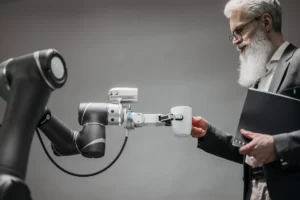
In conclusion, hyperpersonalized e-Commerce with AI is the future of online shopping. With its ability to analyze vast amounts of data and deliver personalized recommendations, AI is revolutionizing the way we shop and interact with e-Commerce platforms. Get ready for a future where every product you find is tailored to you.
Wrap Up
As we’ve explored, the integration of artificial intelligence (AI) in e-Commerce is not just a trend. It’s a paradigm shift that’s reshaping the very fabric of online shopping. With the help of sophisticated AI algorithms, hyperpersonalized e-Commerce has created new avenues for opportunity where each customer’s shopping experience is as distinctive as their preferences.
From fashion to beauty, and groceries to general merchandise, AI driven personalization is setting new standards in customer engagement and satisfaction. Companies leveraging this technology are not only staying ahead of the curve but are also seeing tangible benefits in terms of increased loyalty, higher conversion rates, and enhanced customer insights.
However, this exciting journey is not without its challenges. Issues like data privacy and ethical use of consumer information remain at the forefront, necessitating a balance between personalization and user security. As we look to the future, it’s clear that the potential of AI in e-Commerce is vast and still largely untapped.
The evolution of this technology promises even more sophisticated and seamless shopping experiences, further blurring the lines between digital convenience and personal touch.
In conclusion, the world of hyperpersonalized e-Commerce, driven by the relentless advancements in AI, is not just changing how we shop; it’s revolutionizing what it means to be a consumer in the digital age. As we embrace this new era, one thing is certain: the future of online shopping is here, and it is more personalized, intuitive, and customer- centric than ever before.
FAQs

Hyperpersonalized e-Commerce refers to the use of artificial intelligence (AI) technology to personalize each customer’s online shopping experience. It involves analyzing data about each customers preferences, behavior, and past purchases to deliver highly personalized product recommendations, offers, and promotions.
AI algorithms can analyze large amounts of data in real time, including customer profiles, browsing history, purchase patterns, and even external factors such as weather and social media trends. Leveraging this data, AI can generate personalized recommendations, predict customer preferences, and send targeted marketing messages to improve the online shopping experience.
Hyperpersonalized e-Commerce offers several advantages. It improves customer satisfaction by offering tailored recommendations and personalized content, which increases engagement and conversion rates.
It also improves the overall shopping experience, increases customer loyalty and drives repeat purchases. For businesses, it can mean increased sales, greater customer loyalty and a better understanding of customer preferences.
While hyperpersonalized e-Commerce can be applied to many industries, its feasibility and effectiveness can vary. Industries with high customer engagement and repeat purchases, such as fashion, beauty and electronics, have been successful in applying hyperpersonalization strategies. However, industries with fewer frequent purchases or limited customer data may struggle to leverage AI in hyperpersonalized e-Commerce.
To get started with hyperpersonalized e-Commerce, companies should invest in AI technology capable of analyzing customer data and generating personalized recommendations. They should also ensure that they have robust data collection mechanisms in place to gather relevant customer information.
In addition, it is important to ensure compliance with privacy regulations and establish transparent communication with customers to build trust in the use of their data.
Article sources
At Capital Maniacs, we are committed to providing accurate and reliable information on a wide range of financial topics. In order to achieve this, we rely on the use of primary sources and corroborated secondary sources to support the content of our articles.
Primary sources, such as financial statements and government reports, provide firsthand evidence of financial events and trends. By using primary sources, we are able to directly reference information provided by the organizations and individuals involved in these events.
Secondary sources, such as financial analysis and commentary, interpret and analyze primary sources. While these sources can be useful for providing context and background information, it is important to use corroborated sources in order to ensure the accuracy and reliability of the information we present.
We take pride in properly citing all of our sources, both primary and secondary, in order to give credit to the original authors and to allow our readers to verify the information for themselves. We appreciate your trust in our website and are committed to upholding the highest standards of financial journalism.
- Forbes – E-Commerce 3.0: The Future Of Retail Is Hyper-Personalized
- The European Business Review – Understanding Hyper-Personalization in Ecommerce
- Delloite – Hyper-personalizing the customer experience using data