




 Morgan Riley
The idea of a shortened workweek is becoming more and more popular in this digital age of quickly advancing technology, with the promise of increased productivity and work life balance. Companies are looking into new approaches to increase productivity and rethink typical work schedules in light of artificial intelligence advancements.
The 4 day workweek is a novel concept that compresses the typical 40 hour workweek into a shorter period of time. Without compromising productivity, workers can take an extra day off by extending their workdays to four. Not only does this arrangement help individual employees, but it also makes teams happier and more engaged.
In a Nutshell
- The 4 day workweek concept involves reducing the traditional five working days to just four while maintaining the same level of productivity.
- Artificial Intelligence (AI) can play a crucial role in enabling a 4 day workweek by automating routine tasks, allowing employees to focus on more meaningful and strategic work.
- AI powered technologies, such as chatbots, can handle customer inquiries, freeing employees from repetitive customer service tasks.
- AI can also help with data analysis, processing large volumes of information quickly and accurately, saving employees time.
- With AI, companies can optimize work schedules and resource allocation, ensuring that work is spread evenly throughout the week and minimizing any negative impact on productivity.
- A 4 day workweek can improve work life balance, reduce stress, and increase employee job satisfaction.
- Offering a shorter workweek can make companies more attractive to potential talent, aiding recruitment and retention.
- Companies that have implemented a 4 day workweek with AI support have seen positive results, with employees showing higher levels of motivation and creativity.
- Maintaining clear communication, setting realistic expectations, and properly managing workloads are essential for a successful transition to a 4 day workweek with IA.
- It is important for organizations to analyze the specific needs and demands of their industry and workforce before implementing a 4 day AI workweek.
Thus, what role might AI play in bringing about the 4 day workweek? Workflows can be streamlined, repetitive processes can be automated, and massive amounts of data may be effectively analyzed with artificial intelligence. Employees are able to concentrate on high value tasks that call for creativity and problem solving abilities. Businesses may solve productivity issues, lighten workloads, and eventually make room for a shorter workweek by utilizing AI technologies.
Advertisement

AI based solutions can also assist managers in tracking and managing worker performance in real time. This ensures that work is distributed evenly and productivity goals are met. With AI algorithms that continuously learn and adapt to changing work patterns, companies can optimize schedules, making the 4 day workweek productive and sustainable for everyone.
Adopting an AI aided 4 day workweek not only improves work life balance, but also increases productivity and creativity.
Elon Musk
Using AI to adopt the idea of a 4 day workweek would be a paradigm change in how we view our jobs. It provides workers with extra time to engage in their hobbies, spend time with friends and family, and unwind. At the same time, it enables organizations to improve productivity, attract top talent and foster a healthier work environment.
In conclusion, the 4 day workweek, combined with AI technology, is transforming the traditional work landscape and redefining work life balance. As companies embrace automation and harness the power of artificial intelligence, employees can enjoy a more fulfilling work life experience while remaining productive and engaged. So get ready to reimagine your work schedule and take advantage of the 4 day workweek with the help of AI.
The Role of AI in a 4 Day Workweek
For many professionals, a standard workweek of five days has been the norm for many years. But as technology develops, particularly in the area of artificial intelligence (AI), the concept of a four day workweek is becoming more and more popular. However, precisely how can AI help reduce the length of the workweek?
AI has the ability to automate routine and repetitive jobs, freeing up staff members to concentrate on higher value work. Businesses can improve productivity and streamline procedures by utilizing AI based solutions and software.

AI can efficiently handle tasks like data entry, reporting, and customer service, freeing up time for employees to concentrate on more strategic and creative tasks.
In addition, AI can improve decision making processes. AI algorithms are able to assess trends, patterns, and market insights in real time since they have access to enormous amounts of data. This enables companies to make informed decisions quickly and efficiently, reducing the time spent on manual research and analysis.
Another way AI can contribute to a four day workweek is through the implementation of intelligent scheduling systems. By optimizing work schedules according to staff availability and workload, these systems make sure that resources are used effectively. Businesses may complete the same amount of work in less time by increasing efficiency and cutting out time wasted on pointless activities.
However, it’s important to keep in mind that a four day workweek powered by AI entails more than just reducing work hours. The goal is to make the workplace more balanced and adaptable so that workers can get the best possible work life balance. Employees can devote more time to their personal lives and family obligations since AI handles repetitive duties and delivers intelligent information.
As AI continues to evolve, the potential for a shorter workweek becomes more achievable. By leveraging AI technologies, companies can not only increase productivity but also improve employee wellbeing. The AI powered four day workweek is an innovative approach that has the potential to revolutionize the future of work.

Benefits of 4 Day Workweek with the Help of AI
AI enabled 4 day workweeks are quite advantageous for employers and employees alike. With the growing demand for work life balance, this flexible schedule offers a refreshing change and increased productivity.
Lowering employee stress levels is one of the key benefits of the 4 day workweek. Employees who have an extra day off can spend that time relaxing and doing things they enjoy. More job satisfaction and a better work life balance result from this.
AI plays an important role in reducing the workweek. Employees can concentrate on more significant and difficult initiatives by using AI technologies to automate boring and repetitive work. AI based solutions may handle administrative, customer support, and data analysis duties, which lowers workload and boosts productivity.
AI can also increase worker productivity by offering insightful analysis and suggestions. With AI algorithms analyzing large amounts of data, employees can make better informed decisions and complete tasks more efficiently. This may boost one’s sense of accomplishment and job happiness.
Employers may find it more cost effective to use AI to establish a 4 day workweek. Employing AI technologies to automate jobs helps businesses cut down on personnel expenses. In addition, the positive impact on employee satisfaction and productivity can improve retention rates and reduce turnover costs.
In conclusion, there are several advantages to the 4 day workweek that AI enables. Employees experience reduced stress, improved work life balance, increased productivity and job satisfaction. Employers benefit from cost savings, improved employee retention and higher productivity levels. As AI continues to advance, it will play an integral role in shaping the future of work and enable better work life balance for employees.

 Emily Roberts
Challenges of Implementing a 4 day Workweek with the Help of AI
Employers face a number of obstacles when implementing a four day workweek using artificial intelligence. While the concept of a shorter workweek is appealing, integrating artificial intelligence into this arrangement can be complex. Let’s examine some major obstacles that businesses could encounter when they set out on this road.
Redefining employment roles and responsibilities is one of the main challenges. Employee attention may need to shift to more strategic or creative work when AI takes over some duties. To guarantee a smooth transition, this calls for upskilling workers and workforce adaptation.
Making sure AI is integrated effectively is another challenge. Businesses need to make the appropriate investments in AI systems and technologies that work well with their present workflows. This entails educating staff members on using AI tools and optimizing procedures for maximum effectiveness.
Preserving productivity is another important consideration. While the 4 day workweek is intended to boost work life balance, organizations must ensure that productivity and performance remain at a satisfactory level. Achieving this balance requires using the right performance indicators, defining clear goals, and monitoring employee progress.
Furthermore, time and resource management can be challenging. Companies now have fewer working days, so they must optimize their processes and use their resources carefully. Proper planning and scheduling are critical to avoid potential bottlenecks and maintain productivity levels.

Lastly, it’s critical to manage the expectations and worries of your staff. While a shorter workweek may seem appealing, it is important to address potential downsides, such as a potential reduction in revenue or changes in benefits and overtime policies.
In conclusion, implementing a 4 day workweek with the help of AI comes with several challenges. Overcoming these hurdles requires a strategic and thoughtful approach, including redefining job functions, effectively integrating AI, maintaining productivity, managing time and resources, and addressing employee concerns.
By carefully navigating these challenges, companies will be able to take advantage of the potential benefits of a shorter workweek with the help of AI.
Case Study: The Manufacturing Sector
AI driven automated processes: With the use of AI, top manufacturing business ACME Manufacturing implemented a 4 day workweek. One of the main goals of their transformation was to implement AI driven automated processes in their production lines. They deployed AI driven robots and machines that could perform repetitive tasks with precision and accuracy. In order to adjust to shifting production demands, these systems were outfitted with sophisticated algorithms, computer vision, and machine learning capabilities.
Effect on efficiency and cost savings: At ACME Manufacturing, the adoption of a 4 day workweek with the help of AI driven automation led to significant improvements in efficiency and cost savings. AI based systems not only reduced errors and defects, but also increased production speed and accuracy.
Automated processes allowed operations to continue even during non working days, optimizing resources and maximizing productivity. This resulted in reduced manufacturing time, reduced overhead and improved company profitability.
In summary, these real world examples demonstrate the practical applications of an AI assisted 4 day workweek in different industries. The integration of AI technologies enables companies to automate repetitive tasks, optimize workloads and increase productivity.
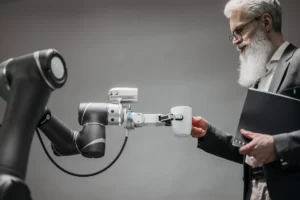
Whether in the technology industry or the manufacturing sector, AI based solutions help to increase efficiency, reduce costs and improve the overall bottom line.
Strategies for Effectively Implementing a 4 day Workweek with AI
Strategies to effectively implement a 4 day workweek with IA Are you ready to adopt a more flexible work schedule? Implementing a 4 day workweek can be a game changer for both employees and companies.
With the help of artificial intelligence (AI), this transition can be even smoother and more efficient. In this article, we will explore some strategies for effectively implementing a 4 day workweek with the help of AI.
One key strategy is to leverage AI for task automation. By automating repetitive and time consuming tasks, employees can focus on more valuable and strategic activities, leading to higher productivity.
AI powered tools can take care of routine administrative work, data analysis and even customer service, freeing up valuable time for employees to excel at their core responsibilities.
Another strategy is to implement an AI based scheduling system. With intelligent algorithms, these systems can optimize employee schedules, ensuring that workloads are evenly distributed and deadlines are met. By effectively managing work hours, employees can maintain a healthy work life balance, reducing burnout and increasing job satisfaction.

In addition, AI can help monitor workloads and identify imbalances. By analyzing data and patterns, AI can provide insights into workload distribution and allocate resources accordingly. This allows managers to proactively address any potential issues, ensuring a smooth workflow throughout the organization.
In addition, AI based communication tools can streamline collaboration and enhance remote work capabilities. With features such as real time messaging, video conferencing and document sharing, AI can facilitate smooth and effective communication between employees, regardless of their physical location.
In conclusion, implementing a 4 day workweek with the help of AI can bring numerous benefits to both employees and companies. By automating tasks, optimizing schedules, managing workloads, and improving communication, organizations can create a more productive and balanced work environment. Harness the power of AI and embark on the journey to a more flexible workweek.
Wrap Up
As we investigate the potential of an AI enabled 4 day workweek, it is evident that this novel strategy has the potential to drastically alter our professional lives. AI integration in the workplace involves more than just task automation. It also involves reinventing our work processes, boosting productivity, and improving both our personal and professional lives.
Important lessons learned:
Enhanced efficiency and productivity: AI’s capacity to manage monotonous jobs frees up staff members to concentrate on more strategic and innovative work, which increases output overall.
Better work life balance: Employees who work a 4 day workweek have more time for personal interests, which improves their wellbeing and job satisfaction.
Challenges and considerations: Careful preparation is needed for the shift to a 4 day workweek with AI assistance, including upskilling the workforce and taking ethical issues with AI use into account.
The future is here. The idea of a shorter, more productive workweek is starting to come true for many businesses as AI continues to advance.
As we move forward, it’s critical that companies adopting an AI driven 4 day workweek take into account the particular requirements of their workforce and industry. The advantages, which include higher output, better worker satisfaction, and more alluring workplace, are alluring. But it’s also critical to carefully negotiate the difficulties.
The 4 day workweek facilitated by AI is more than just a fad; it’s evidence of how technology can improve the world. We may open the door to a future in which work becomes a more rewarding aspect of our lives rather than merely a means to an end by embracing AI.
This article has examined the various aspects of a 4 day workweek made more efficient by AI while offering opinions and ideas on its application. AI will surely be a major factor in determining the nature of work in the future as technology develops, providing a window into a world where productivity and work life balance coexist peacefully.
FAQs

A 4 day workweek is a schedule that allows employees to work four days and have the remaining three days off.
A 4 day workweek can provide employees with a better work life balance, reduce stress, improve mental health, and allow more time for personal interests.
Yes, it can also have advantages for employers. A 4 day workweek can increase employee productivity, increase job satisfaction, improve retention rates and reduce absenteeism.
There have been cases of companies maintaining or even increasing productivity with a 4 day workweek. Efficient use of time, increased concentration and motivated employees can help maintain productivity levels.
While the 4 day workweek can be applied in various industries, its suitability may vary depending on the nature of the work. Functions that rely heavily on customer service or require round the clock availability may find it difficult to adopt a 4 day workweek.
AI technology will play a key role in the shift to a 4 day workweek. They can handle repetitive duties like data entry, scheduling, and customer support queries, freeing up human workers to concentrate on more intricate and imaginative work. With the help of sophisticated AI algorithms, workflow and resource allocation may be optimized to make the compressed workweek just as productive as the regular one. Additionally, decision making insights from AI driven analytics improve overall corporate efficiency.
An AI enhanced 4 day workweek has many advantages, but it could also have drawbacks. Some industries may see job displacement as a result of their reliance on AI for work automation.
Additionally, workers may experience pressure to be more accessible after work, which could upset the goal of the 4 day workweek to promote a better work life balance. Ensuring the ethical and responsible implementation of AI tools is crucial in order to prevent biases in decision making processes.
Article sources
At Capital Maniacs, we are committed to providing accurate and reliable information on a wide range of financial topics. In order to achieve this, we rely on the use of primary sources and corroborated secondary sources to support the content of our articles.
Primary sources, such as financial statements and government reports, provide firsthand evidence of financial events and trends. By using primary sources, we are able to directly reference information provided by the organizations and individuals involved in these events.
Secondary sources, such as financial analysis and commentary, interpret and analyze primary sources. While these sources can be useful for providing context and background information, it is important to use corroborated sources in order to ensure the accuracy and reliability of the information we present.
We take pride in properly citing all of our sources, both primary and secondary, in order to give credit to the original authors and to allow our readers to verify the information for themselves. We appreciate your trust in our website and are committed to upholding the highest standards of financial journalism.
- Time – Could AI Enable Humans to Work 4 Days a Week?
- Cloud.google – AI will help us get to a four-day work week
- 4dayweek.io – 4 Day Week Jobs (32hrs @ 100% salary) – 4dayweek.io
- Fortune – AI should make the 4 day work week possible for millions of workers. The question is whether they’ll use the free time for leisure-or more work
- Businessinsider – JPMorgan CEO: AI Will Eventually Lead to 3.5-Day Workweek
- Theguardian – Rise of robots ‘could see workers enjoy four-day weeks’
- Fastcompany – Want a 4-day workweek? Invest in artificial intelligence